Skip to Content

Gina Renzi

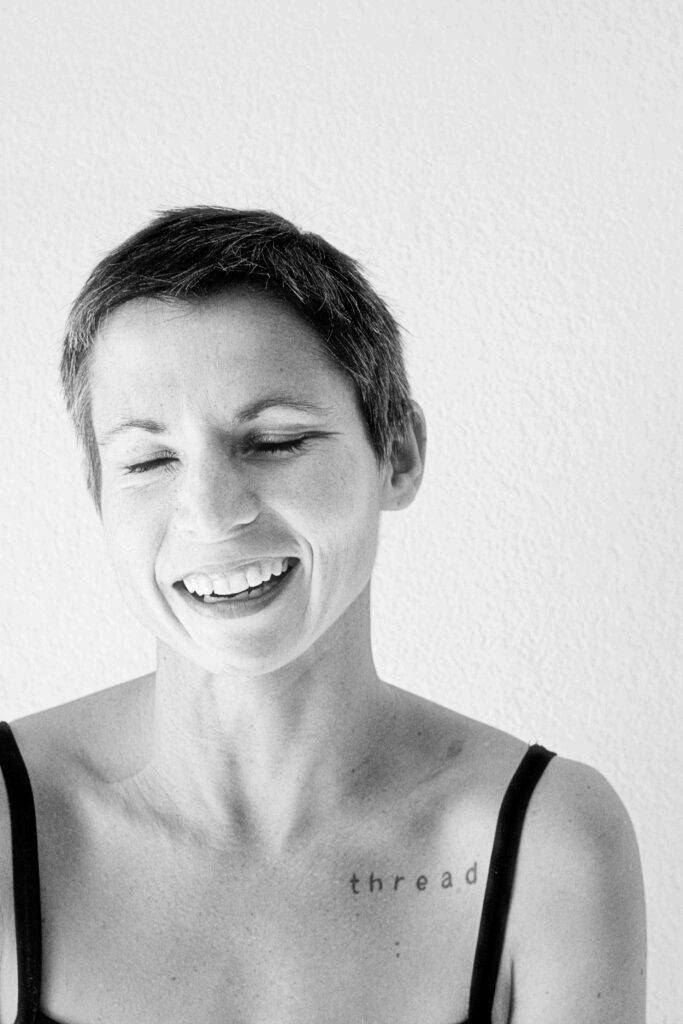
Billy Penn petting Gina, Photo by Scott Cole

Before she was appointed Director of The Rotunda, Gina Renzi was a local event organizer, artist, and activist. Her appointment as Director of The Rotunda allowed an increase in the frequency of events at the space while strengthening marketing efforts, outreach, and quality of programming.
So who are you beyond the CV?

My name is Gina Renzi. I’ve been involved with The Rotunda since 2000, which is hard to wrap my head around. I’ve been the full-time director since 2003. I grew up in Philly. I went to Drexel for a time, I went to Temple, now I work at Penn. I’ve kind of made a little bit of a tour, so to speak, but I’ve always lived in Philly,

The Rotunda’s my life at this point. It’s kind of been a second education for me: it’s been college, it’s been church, it’s been family. Everything I do comes back to this space.

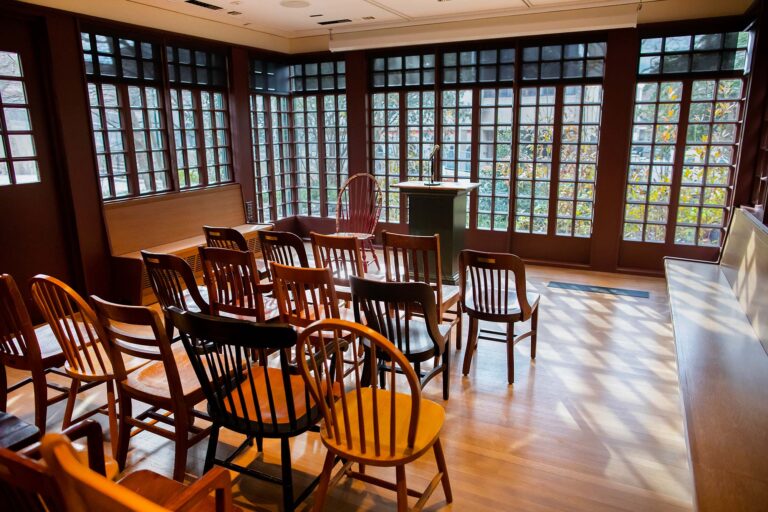
The Rotunda is an arts and culture community venue. It is really the only thing of its kind at Penn or in the region. It is a university-sponsored community space where anybody and everybody can walk in—it doesn’t matter who they are. They don’t have to fill out an application, they don’t have to have a certain pedigree, they don’t have to know a certain person, and we will help them to put on an event. That means we work with a lot of first-time event curators.

We host a lot of self-producing artists, musicians, students, activists, and a lot of neighbors. We take that seriously. I’m all about accessibility: all about connecting people to what they need—as much as I can. We’re also able to take money that we have from a small programming budget at Penn and give it directly to those artists and musicians and event curators, so that most of our events are free. If there’s a free event, 9 times out of 10, we’re paying those folks, so the audience reaps those benefits as well. We’re all about equity, mutual aid, exchange, all the words that you hear thrown around now—but they are real at The Rotunda.

The Rotunda shape note singing, Photo: Gina Renzi

Can you describe your arts pathway to where you are now?

I did not have a straight path. I think most of us in the arts don’t. I was always that kid who was drawing, who was painting. I was writing bad poetry—trying my hand at different things. I was lucky enough to have a lot of creative friends around for most of my upbringing. At one point, I thought I might be an art teacher. Like a lot of young people, I was just trying to figure it out.

Early on, I knew I loved buildings, I loved architecture, I loved the history. Like I said, I grew up in the city, I’m deeply in love with cities in general. I love to travel, and I love to just see how people are living in their spaces. I’m not as interested in places where people are more separated from one another. I like density, urban experiences, so I thought I wanted to be an architect, and I studied for a couple years at Drexel. I realized I only really liked talking about architecture, I didn’t really like building models. But I met a lot of dedicated people, and I saw how committed they were, and I thought—I’m not as committed. So… I need to find something else, my thing.

I took some art history classes, and I talked to a professor and he said, I think that you should study art history. I transferred to Temple, because I didn’t want to leave the city, but I didn’t actually finish. I had been a high achiever in school, but I felt done at that point. I decided to join the workforce. I had been working since I was in high school, but I wanted to find a job that excited me.

I floundered for a while, and I had friends who were artists and musicians. I was lucky in that. We would go to people’s events and talk to folks, and I realized that I wanted to put on events. At the time, there weren’t a whole lot of places you could study that—you kind of learned it on the job. A cousin of mine worked for Electric Factory Concerts, which is not a thing anymore, but they used to own what was the Electric Factory (now Franklin Music Hall), and the TLA on South Street, and Tower Theater in Upper Darby. She called me one day and said, “We need somebody to work in the box office, and you need money.” So I took that job, and I worked in a box office at the Electric Factory and the TLA. I ended up taking on more and more responsibilities. I started getting production experience, working with the house managers. At the same time, I started putting on events with friends. Very grassroots, do-it-yourself stuff, using underground spaces—upstairs at a bar, above a church, etc. I learned about sound systems, about how you bring people in, how to make flyers, burn CDs. This was 2000, so we weren’t relying on social media.

The Rotunda Tuesday Vogue Session 2023, Photo: ChrisStroKyle

How did you get to Penn?

Well, I did an event in August of 2000 with two friends at the Community Education Center— the CEC—at 35th and Lancaster, not far from here. A Penn student who was involved with The Rotunda (they had just begun doing things here in 1999) came to one of our events and said, “We’re going around to people who are doing things in West Philly, and we heard about this event and some other things you’re doing, and we want to bring you into this venue.” At the time, they had a good bit of programming, and they had the vision to understand that they couldn’t do it all themselves. They wouldn’t necessarily all be around forever. If it was going to be a community space, they had to literally go out into the community and see what people were doing and ask them to come in.

Just like we operate now, there was no barrier. They didn’t ask us to pass a test, they didn’t ask us who we knew at Penn, nothing. They themselves came to events, they saw they were great, they saw that we had some vision of our own. So I started coming in for a while, volunteering. I got involved in a monthly series that was happening here. I became the co-curator of Gate to Moonbase Alpha, and my co-curator and I went around the city, we booked acts, we got money from Penn, we paid them—we did all the things.

Eventually, those same students were graduating, they were trying to figure out who would keep this community space running—could this be a job for someone? And Penn Facilities and Real Estate, who had been supportive from the very beginning, said, “Well, let’s bring somebody in, let’s contract someone.”

So I was a contractor for a year plus, and then they interviewed other people, but I got the permanent job, and I’ve been full-time since then.

What have Penn and its people have come to mean to you?

Penn is a million things, you know? Penn is thousands of people, so I don’t want to say it’s a monolith, but there is a culture, and The Rotunda is technically off-campus. I work with more non-Penn folks than I do with Penn folks. We have amazing art spaces at Penn who do tons of community outreach. And we’re not necessarily the same, though: that’s fine, we need all of us here. It took me a while to figure out who my people were, even though there have always been supportive groups around—beginning with Facilities and Real Estate and the Netter Center for Community Partnerships. They’ve always supported us, they support Work Study students here, they’ve always been a sounding board. It was a class through the Netter Center that actually brought the students together who created The Rotunda.

When the Sachs program came in, they did a lot of work to let all of us in the Penn arts community know what everybody else is doing and on what projects we might be able to collaborate.

And I have to shout out Social Equity and Community at Penn. Those folks, while they’re not in the arts, per se, understand what we’re doing. And they have, on a consistent basis, brought us in front of students, brought their fellows here, connected fellows to work that’s happening here. They’ve established two mutual aid pantries outside of our east entrance years ago, and students are still running those.

Do you have something that you’re excited about right now?

This past September, we launched a volunteer program, and some of those volunteers have become like staff—we have all these people who take this place so seriously, who live and breathe for it. And we’re trying to see how we can support them even more, and work within the university to do that. I’m super excited about where that’s going to go.

Also—there’s a bunch of new folks who are putting on events now in the neighborhood, and who are doing things a little bit differently. We’re working with them and trying to figure out how they want to operate, and what communities they want to reach out to, and how we can connect them with folks who’ve been around much longer—so that the stuff they make can be multi-generational and have real roots.

If you don’t look to younger people, you’re not going to survive. So I’m trying to figure out how to support the next kind of generation of Rotunda family member, if you will.

The Rotunda Chuck van Zyl show March 2026, Photo: Michael Manton

How can people get involved?

Right now, I can point out a group of students called West Philadelphia Sanctuary.

Their purpose is essentially to fight social isolation and to provide a third space for people. They have found a foothold at The Rotunda. For the most part, they’re here once a week—during the academic year it was Mondays noon to 2pm. People with non-traditional work schedules or who are caring for young children, they find their way to the sessions that these students conduct here. Sometimes a student is just sort of gently guiding—there’s a theme—so maybe a student is embroidering, and you can learn to embroider with them, or they’re painting. When you’re playing a board game with people, or you’re just coloring or something, you have these conversations that you wouldn’t have otherwise. Organic conversations. People come and talk about everything and anything that’s on their mind and connect. The sessions tend to be small, sometimes it’s no more than a handful of people, but sometimes it’s more. The size isn’t really the point—they’ve been consistent.

That’s really what The Rotunda is about, and it also reminds me of how the students who started The Rotunda were—how they remained open to people that they don’t know and don’t know anything about. If that sounds good to someone, if this place sounds like them, they can find the Sanctuary here. Or they can stop by. They can volunteer.

The Rotunda Cheers for Years community dinner, Photo: Ruchama Bilenky