Skip to Content

Johanna Burton

Arts at Penn

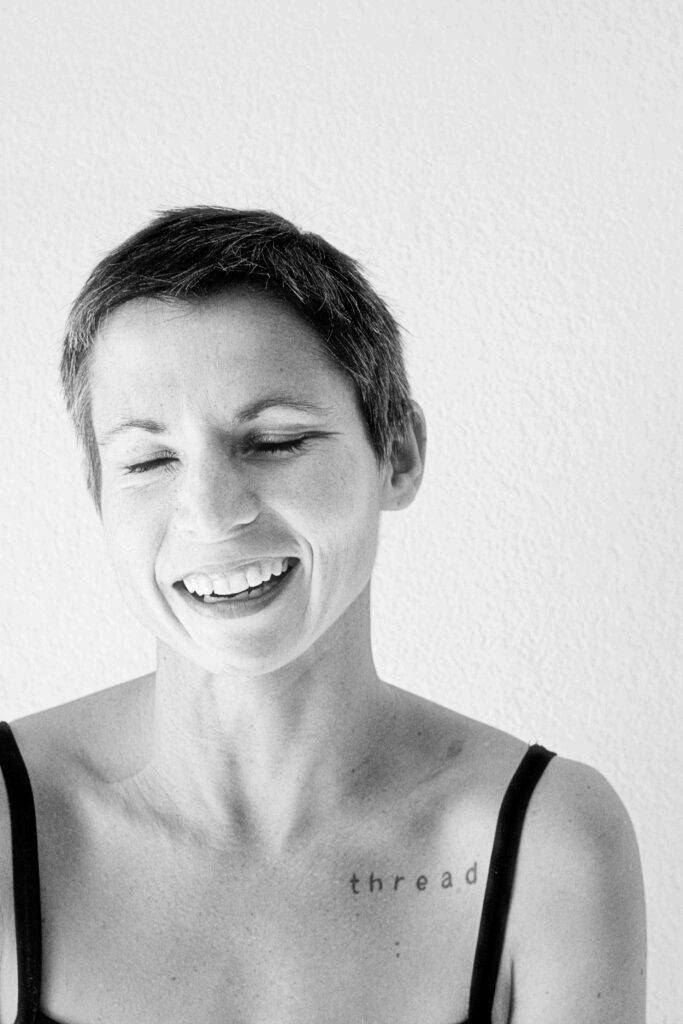
Johanna Burton is Daniel W. Dietrich II, Director of the Institute of Contemporary Art, University of Pennsylvania. An art historian, curator, writer, and educator, Burton has been active in the contemporary art field for nearly 20 years—including more than a decade of leadership experience in major museums and prominent arts and education institutions.
Who are you, and what are you about beyond your CV?

My name is Johanna Burton, and I am a mother to a wonderful 14-year-old son, partnered to a great spouse, and caterer to the whims of two hilarious cats. What else? I feel a bit like I live my work… which is to say that there’s very little separation. I am a long-time believer in artists and cultural institutions.  I’m lucky to work in a place and in a field that is both my passion and my profession. I also love the outdoors and reading and cooking and traveling and being with family and friends.

Could you share what your pathway was to where you are now?

The condensed version is that I grew up in rural Nevada, just outside of Reno, so in a kind of barren, beautiful place that imprinted on me in ways I am only beginning to understand. I was lucky to be surrounded by a lot of different kinds of culture, although it was clear to me pretty early on that I wanted to get myself to New York. Which I did—after I earned my undergraduate degree at the University of Nevada, Reno. And then I went on to study and train on the east coast in art history and performance studies, and then immediately started working in institutions: a blend of academic, alternative, curatorial, and education positions. My first real job was as the Associate Director of the Whitney Independent Study Program (ISP). I went on to become the Director of Bard College’s Graduate Program in Curatorial Studies (CCS). Then, I was happily the head of education and a curator at the New Museum for about seven years before starting my directorial track. I helmed Ohio State University’s Wexner Center for the Arts for a few years, then moved to Los Angeles where I ran MOCA for four. And then, just about six months ago, I moved to Philadelphia to begin my work at ICA.

Image for Condition of Being Near, Pok Chi Lau, Family Altar of Lai Wa (José Tolón) Santiago de Cuba, 2009, Courtesy of the artist

So, you are fairly new to the city and to Penn… what is your impression?

Well, as you know, Philly is pretty great. I lived in New York for 20 years, and I jumped on a train to come here all the time to see shows at ICA, and also to visit PMA and the Barnes and the Fabric Workshop, and the list goes on. The number of universities and colleges is amazing. I knew that on paper, of course, but being here—you can actually feel that the city is kind of a college town, in a really nice way… It’s a place of teaching and learning, but also of stalwart and committed community engagement. I am definitely still getting to know the city, which is a pleasure. There are such good restaurants and parks and people.

And I’m very enthusiastic about being part of Penn. I realized at a certain point in my career that I’d been fortunate to sort of wind my way through a variety of diverse institutions, and that this was an opportunity to bring together the kind of academic lines of inquiry that can happen between disciplines and thinkers on a campus like Penn with the radical, artist-driven experimentality of a place like ICA. I’ve been very warmly welcomed to this community, and every day I’m meeting new people who inspire me to do work that is research-based, but that can take new forms and aims when inflected by contact with artists. So, I’m feeling reaffirmed in my decision to come here pretty much every time I step on campus. It’s also an especially exciting time because there’s a palpable commitment to the arts felt by way of my boss Tim Rommen and his new position as Vice Provost for the Arts, as well as in the group of cultural leaders on campus and beyond that come together regularly to think through what’s possible here.

Could you name a current project or excitement, anything that is meaningful to you right now?

The current show on view at ICA focuses on the continued impact of the Shakers on contemporary culture, particularly on artists—contemporary artists who continue to think about the legacy of the Shakers and the world-making and alternative modes of self-governing that they made possible. I am proud of the exhibition without having had much to do with its inception: it’s nice to see how people are very appreciative of seeing different models for living and being together. On the horizon here are a number of new initiatives that we’re going to roll out in the coming months, so I’ll give a sneak peek of some of that. Earlier, I alluded to artists as researchers. I’ve spent a lot of time working in this vein, really thinking about experimentation and artistic creativity as creating a vector to think through—and even make roadmaps for or pictures of—new futures and other possibilities. And so we’re in the process of creating a more formal framework and platform for that kind of work at ICA. There’s precedent here, many artists and curators who’ve tried things out in ways they maybe couldn’t anywhere else, but given the context of today’s world, it’s an opportunity that feels very relevant and urgent to really invest in this direction. Committing time, resources, and belief in artists is so meaningful, and we’re the right scale and have a sense of clear stakes to do that well. So I am excited as we get close to kicking that off. Then in the fall, we’re opening a fantastic show called The Condition of Being Near, curated by Denise Ryner and Zairong Xiang, which traces intersections of Afro-Asian solidarity. That project is a global consideration of modes of—not just survival—but thriving through alliance, through the shared experience of difference. And in the spring, there’s an amazing survey exhibition by the artist Allison Janae Hamilton, curated by Hallie Ringle, on the calendar. Allison’s work often meditates deeply on the American south, through poetic and political investigations of material culture. Her ideas and work are so moving, and we’re thrilled to be bringing her to ICA.

Image for Allison Janae Hamilton: A Slow Drag for the Conjure Women, Courtesy of the artist and Marianne Boesky Gallery, New York and Aspen

What else would you like to say?

I am honored and hopeful to contribute to this next phase of ICA’s future. I think spaces like ours are more crucial than ever. At moments like ours today, the role of arts and culture is urgent. It is an urgent time for reimagining, and for holding space that insists reimagining is possible.  And so I’m keen to hear from folks—since I’m new to this community—to hear ideas and to learn as I immerse myself and help write a new chapter. So, I would advocate for a lot of dialogue. And I’m excited to be here, where I think that’s possible.

Thank you for taking the time. It was a pleasure.